

Why This Matters
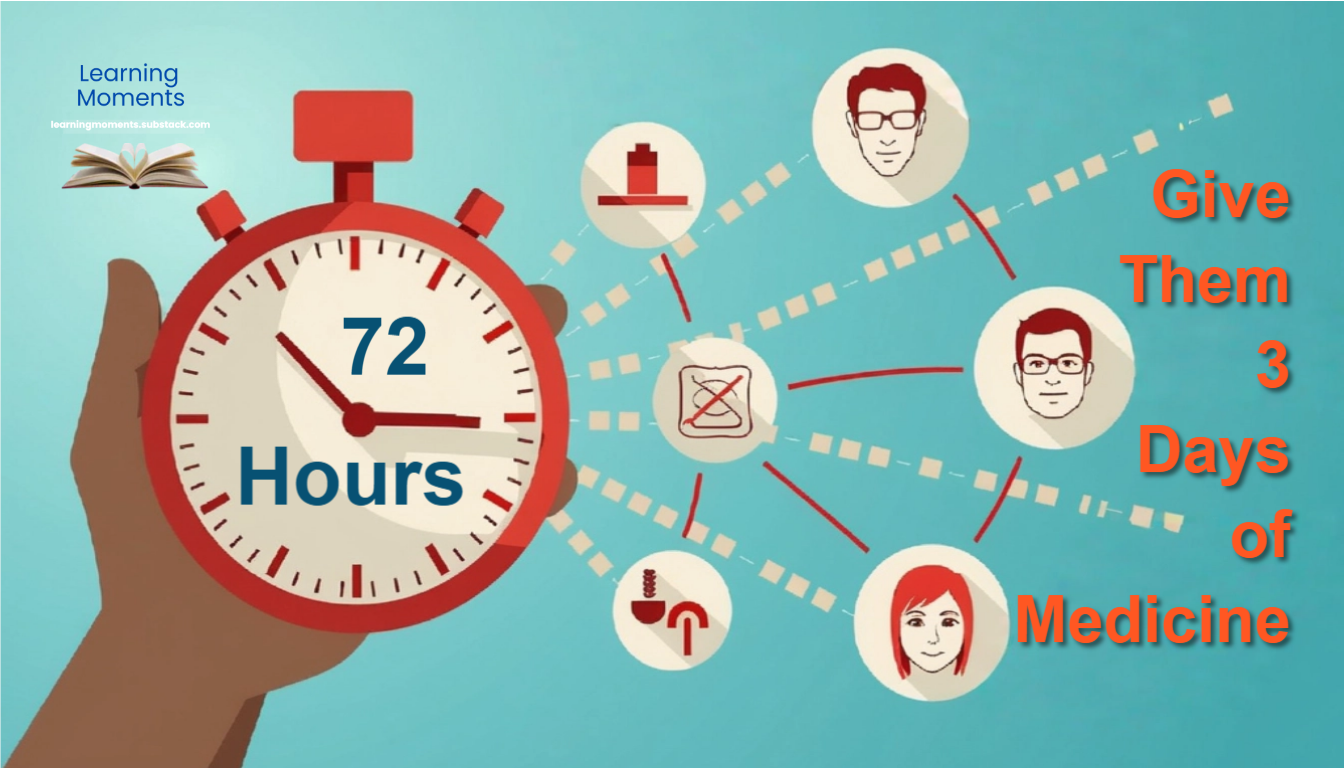
When someone with opioid addiction leaves the hospital, the next 72 hours are the most dangerous. Their body has lost its tolerance to opioids while in the hospital, cravings are high, and if they use again, even at the dose they used before, they could overdose and die. In British Columbia, more than half of all toxic drug deaths happen at home, often right after someone is discharged from the hospital.
This isn’t just a medical issue. It’s a life-or-death gap in care. But there’s a simple, proven fix: give patients a short “bridge” supply of addiction medication before they walk out the door. That’s what this article is about. Why it works, how it’s done, and how families can help make sure it happens.
You can watch the companion Video Podcast on our YouTube Channel: HERE
The Crisis in B.C. (In Plain Numbers)
In 2024 alone, 2,305 people in B.C. died from toxic drugs. Almost half of those deaths happened in private homes, and many of those were people who had just left the hospital [BC Coroners Service]. That’s not a coincidence. It’s a system failure and one we can fix.
Why Start Medicine in the Hospital?
Medications like Suboxone (buprenorphine-naloxone) or methadone can help people stop using street opioids. They reduce cravings, prevent withdrawal, and, most importantly, lower the risk of overdose.
Hospitals are one of the few places where people with addiction are already in care. Whether they’re there for an infection, injury, or other critical care, it’s a golden chance to start treatment. Giving them medicine before they leave, even just for a few days, keeps them stable until they can see a clinic in the community.
Studies show this “bridge” approach works. It keeps people alive. It gets them to their next appointment, and it cuts down on repeat ER visits and hospital stays.
What’s at Stake?
For patients: Without medicine, withdrawal hits hard. Cravings take over. The risk of using and overdosing skyrockets.
For families: Knowing your loved one has medicine in hand brings peace of mind. It gives hope.
For the health system: Fewer overdoses. Fewer readmissions. Better use of resources. Lives saved.
One study found that when hospitals offer addiction medicine consultations, patients are less likely to leave against medical advice and less likely to come back to the hospital soon after.
Why the First 72 Hours Are So Deadly
After being in the hospital, a person’s tolerance to opioids drops fast. If they use again, even at their “normal” dose, it can be fatal. Add in intense cravings and a toxic, unpredictable drug supply (often laced with fentanyl), and you’ve got a perfect storm for overdose.
The BC Coroners Service says the risk of death is highest in the first 3 days after leaving the hospital. Especially if they don’t get medicine before they go.
Here’s the heartbreaking part: about half of the people discharged after an opioid overdose in B.C. don’t get any addiction medicine at all. That’s a preventable tragedy.
What’s Allowed? (The Rules in B.C.)
Suboxone (buprenorphine-naloxone)
Any doctor can prescribe it. Hospitals can give a 7- or 14-day supply to take to any pharmacy. No special paperwork. No waiting. Just like getting antibiotics.
Methadone
Tighter rules. Only specially trained doctors can prescribe it long-term. BUT, hospitals are allowed to give up to 3 days of “take-home” doses if someone is discharged before a weekend or holiday. These come in sealed pink bottles from the hospital pharmacy. Safe, labelled, and ready to go.
This isn’t bending the rules. It’s following them and it saves lives.
What Is a “Bridge Prescription”?
It’s exactly what it sounds like: a short supply of medicine to “bridge” the gap between leaving the hospital and seeing a community clinic. Usually 3–7 days. Often, Suboxone, because it’s easier to prescribe.
Example: At St. Paul’s Hospital in Vancouver, they started giving 5-day Suboxone bridges. Result? 70% of patients showed up to their first clinic appointment. Double the rate before.
Why Doesn’t This Happen More Often?
1. Hospitals and clinics don’t talk to each other.
No shared records. No clear handoff. Patients fall through the cracks.
2. Weekends and holidays are deadly gaps.
Most clinics and pharmacies are closed. If you leave the hospital on a Friday with no medicine, you’re on your own until Monday, if you survive.
3. Staff don’t always know the rules, or don’t act fast enough.
Time is short. Shifts change. Paperwork piles up, and sometimes, no one thinks to ask: “Did they get their medicine?”
What Happens If Medicine Is Delayed?
Withdrawal kicks in fast. Nausea, shaking, anxiety, pain. Cravings become unbearable. People turn to street drugs to feel better and because their tolerance is low, even a small amount can kill them.
This isn’t failure. It’s physiology. And it’s predictable. Which means it’s preventable.
A Real Story: Jordan’s Case
Jordan, 24, survived an overdose and was treated at his local hospital. During his admission, he told doctors he was ready for treatment of his substance disorder. Doctors started him on Suboxone. He felt better. But when he was discharged on a Friday, no clinic could see him over the weekend. He was sent home with just a phone number.
He used again on Saturday. He died.
His story is not rare. It’s routine and it didn’t have to happen.
How Families Can Help: The Discharge Checklist
You don’t need to be a doctor to make sure your loved one gets what they need. Use this checklist before they leave the hospital:
✅ Was addiction medicine started in the hospital?
Medicine: _______________ Dose: ________
✅ Was a bridge prescription written? (Minimum 3 days)
✅ Pharmacy name and phone: _____________________
✅ First B.C. clinic appointment booked?
Date: ________ Time: ________
✅ If on methadone, were 3 take-home doses given?
Number of bottles: ______ Expiry: ____________
✅ Free naloxone kit provided?
✅ 24-hour support numbers written down:
- Nurse Line: 811
- Mental Health Support: 310-6789
- Toward the Heart (naloxone info): 1-855-662-6603
✅ Was a peer coach or lived-experience worker assigned?
✅ Is there a safe place to stay tonight?
Address: _______________________________
✅ Were medical records sent to the next provider?
✅ Did staff show how to take the medicine and when to call 911?
✅ Date: ________
Notes:
Common Questions — Answered Simply
“Isn’t take-home methadone dangerous?”
No, not when it’s given by the hospital. Each dose is sealed, labelled, and safe. Far safer than street fentanyl.
“We can’t find a clinic with an opening.”
Call 811 or your local RAAM (Rapid Access to Addiction Medicine) clinic. They take walk-ins and can often see you within 24 hours.
“What if PharmaCare won’t cover it?”
It does. Both Suboxone and methadone are covered. If there’s a delay, hospital social workers can help sign them up before they leave.
“What if they use again while on the medicine?”
The medicine still protects their heart and brain. Survival comes first. Recovery is a journey, not a single step.
What Needs to Happen Next
Every B.C. hospital should have a standard policy: If you’re being treated for opioid addiction, you leave with medicine in hand. No exceptions.
Addiction specialists should be part of every hospital team. Not an afterthought.
Families need to be empowered with checklists, phone numbers, and the confidence to speak up.
Peer support workers and community clinics need better links to hospitals so no one falls through the cracks.
One study found that when people are kicked out of treatment programs, they’re more likely to become homeless or overdose again [Gallant K et al.]. That’s why support after discharge isn’t optional; it’s essential.
Final Thought: 3 Days Can Save a Life
It’s that simple. A 3-day supply of medicine. A confirmed clinic appointment. A naloxone kit. A safe place to sleep.
These aren’t luxuries. They’re lifelines.
As Jordan’s mom said, “If the hospital had just given him a week of medicine, he would be here.”
Let’s make sure the next Jordan doesn’t slip through the cracks.
References
Suboxone – (Buprenorphine/ naloxone). Any licensed BC physician can prescribe this medication for treatment of opioid use disorder https://www.bccsu.ca/wp-content/uploads/2017/05/BupNlx-did-you-know_final.pdf
APA 7: American Psychological Association 7th edition
Schwartz, R. P., Mitchell, M. M., O’Grady, K. E., Kelly, S. M., Gryczynski, J., Mitchell, S. G., Gordon, M. S., & Jaffe, J. H. (2018). Pharmacotherapy for opioid addiction in community corrections. In International Review of Psychiatry (Vol. 30, Issue 5, pp. 117–135). Informa UK Limited. https://doi.org/10.1080/09540261.2018.1524373
Stotts, A. L., Dodrill, C. L., & Kosten, T. R. (2009). Opioid dependence treatment: options in pharmacotherapy. In Expert Opinion on Pharmacotherapy (Vol. 10, Issue 11, pp. 1727–1740). Informa UK Limited. https://doi.org/10.1517/14656560903037168
Sofuoglu, M., DeVito, E. E., & Carroll, K. M. (2019). Pharmacological and Behavioral Treatment of Opioid Use Disorder. In Psychiatric Research and Clinical Practice (Vol. 1, Issue 1, pp. 4–15). American Psychiatric Association Publishing. https://doi.org/10.1176/appi.prcp.20180006
(2016). Treatment of Opioid-Use Disorders. In New England Journal of Medicine (Vol. 375, Issue 16, pp. 1596–1597). Massachusetts Medical Society. https://doi.org/10.1056/nejmc1610830
Spivack, S., Mueller, D., Axelrod, P., & D’Orazio, J. (2020). 309. The Impact of Addiction Medicine Consultation on Discharges Against Medical Advice in Patients with Opioid Use Disorder and Staphylococcus Aureus Bacteremia. In Open Forum Infectious Diseases (Vol. 7, Issue Supplement_1, pp. S152–S152). Oxford University Press (OUP). https://doi.org/10.1093/ofid/ofaa439.352
Dolinak, D. (2017). Opioid Toxicity. In Academic Forensic Pathology (Vol. 7, Issue 1, pp. 19–35). SAGE Publications. https://doi.org/10.23907/2017.003
Corace, K., Schubert, N., Willows, M., Herbert, G., & Garber, G. (2019). 890. Bridging the Gap to Help Address the Opioid Crisis: A Novel Model of Care to Integrate Substance Use, Mental Health, and Infectious Disease Services. In Open Forum Infectious Diseases (Vol. 6, Issue Supplement_2, pp. S22–S22). Oxford University Press (OUP). https://doi.org/10.1093/ofid/ofz359.049
Awesome post …I learned something new today …thank you for the enlightenment