

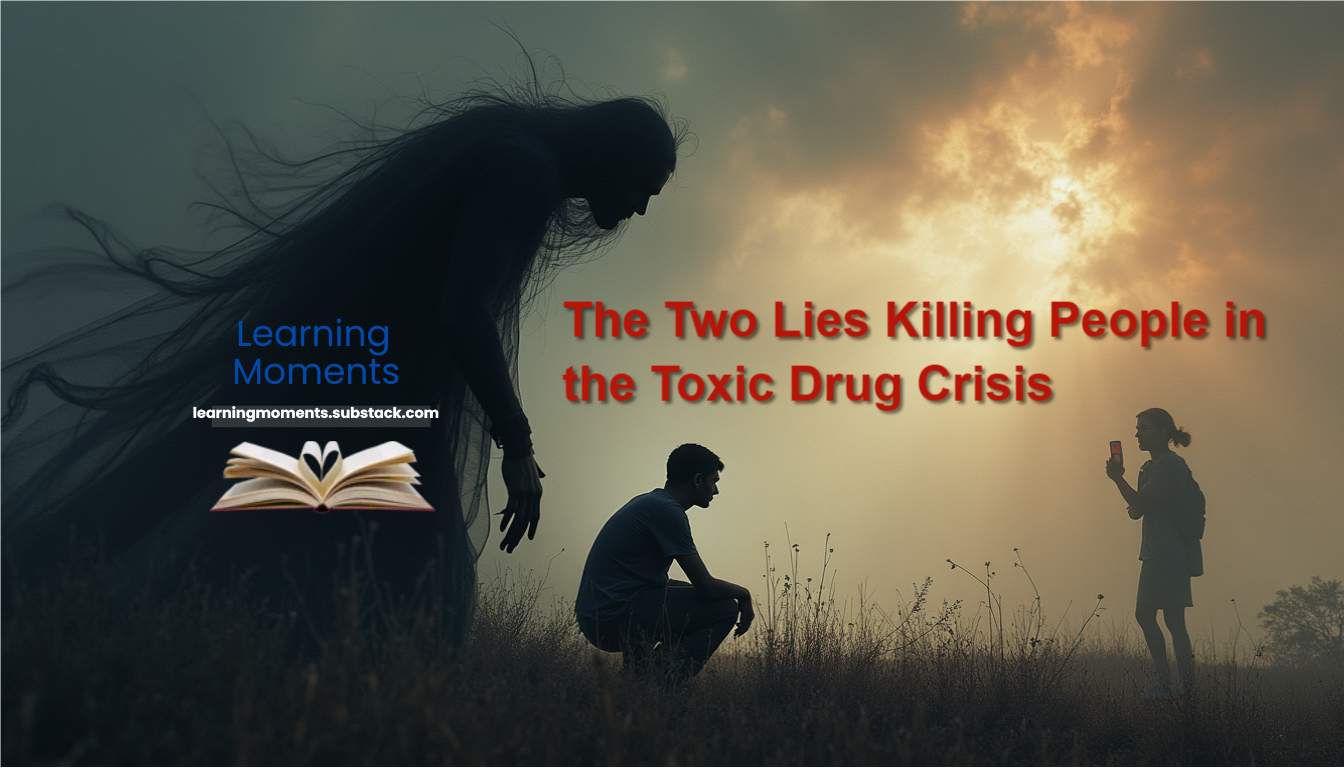
"The biggest lie about addiction: It's a choice. The biggest lie about harm reduction: It enables addiction." — Guy Felicella
These words, spoken by a man who survived addiction for two decades on Vancouver's Downtown Eastside, cut through decades of misinformation like a blade through fog. Guy Felicella isn't speaking from textbooks or theory — he lived 20 years on the streets, survived six overdoses, five bone infections, and emerged as one of Canada's most powerful voices in addiction advocacy and harm reduction. When someone who has walked through hell speaks truth, we should listen.
Today, as our communities grapple with a toxic drug crisis that claims lives daily, these two lies continue to kill people. They poison public policy, fuel stigma, and create barriers that literally stand between life and death for our most vulnerable neighbours. It's time to shatter these myths with facts, compassion, and a clear understanding of what addiction really is — and what truly saves lives.
The First Deadly Lie: Addiction Is a Choice
Picture addiction as a raging house fire. Would you tell someone trapped inside to simply "choose" to walk through the flames? Would you blame them for needing the fire department instead of just deciding to stop being on fire? This metaphor isn't perfect, but it reveals the absurdity of treating addiction as a simple matter of willpower.
The "choice" myth is perhaps the most damaging piece of misinformation in our culture's understanding of addiction. It suggests that people wake up one morning and decide, "I think I'll destroy my life, lose my family, my home, and my health today." It implies that recovery is just a matter of wanting it badly enough — that everyone who remains in active addiction simply isn't trying hard enough.
This lie ignores the mountain of scientific evidence showing addiction as a complex brain disease. When someone uses substances repeatedly, their brain chemistry changes. The parts of the brain responsible for decision-making, impulse control, and judgment become compromised. It's like expecting someone with a broken leg to run a marathon — the biological tools needed for "choice" have been damaged.
Consider Maria's story — a composite of countless individuals I've encountered through advocacy work. Maria was a nurse, a mother of two, who first tried prescription painkillers after a car accident. She followed her doctor's orders perfectly. But when the prescription ended, the pain — both physical and emotional — remained. What started as legitimate medical treatment became a desperate daily search for relief. Did Maria "choose" to lose her nursing license? Did she "choose" to sleep in her car? Did she "choose" to break her children's hearts?
Maria's brain had been hijacked by a disease that convinced her that drugs were as necessary as food or air. The choice narrative would have us believe she was simply weak or selfish. The reality is that she was sick and needed treatment, not judgment.
The choice myth does more than misunderstand addiction — it actively harms people. When society views addiction as a character flaw rather than a health condition, we respond with punishment instead of treatment. We build more jails instead of more treatment centers. We shame people instead of supporting them. And every day this myth persists, people die from a treatable condition because we've convinced ourselves they just need to "choose better."
The Second Deadly Lie: Harm Reduction Enables Addiction
If the first lie kills through neglect and punishment, the second lie kills through the prevention of life-saving interventions. The myth that harm reduction "enables" addiction is like saying that seat belts enable car crashes or that umbrellas enable rain. It confuses cause with prevention, safety with encouragement.
Harm reduction is based on a radical idea: that people who use drugs are human beings worthy of life, dignity, and care — regardless of whether they're ready or able to stop using. It recognizes that while abstinence may be the ideal outcome, keeping people alive and healthy while they struggle with addiction is the essential first step.
Think of harm reduction as a bridge. On one side stands active addiction — chaotic, dangerous, often deadly. On the other side lies recovery, stability, and health. Traditional approaches often demanded that people leap across a vast chasm in a single bound. Harm reduction builds a bridge, allowing people to cross step by step, at their own pace, with support along the way.
Safe consumption sites perfectly illustrate this bridge-building approach. These facilities provide clean supplies and medical supervision for people who are going to use drugs regardless of what we think about it. Critics claim these sites "enable" drug use, but the evidence tells a different story. These sites prevent overdose deaths, reduce the spread of infectious diseases, and actually increase the likelihood that people will enter treatment.
Consider James's story — another composite drawn from real experiences. James had been injecting drugs for fifteen years, sharing needles in dirty alleyways, overdosing alone. When a safe consumption site opened in his neighbourhood, he was skeptical. "They're just going to judge me," he thought. But desperation drove him there one cold morning.
For the first time in years, James injected drugs without fear of dying alone. The nurse who supervised him didn't lecture him about his choices — she asked about his health, offered him clean water, and told him about a new treatment program when he was ready. Six months later, James started medication-assisted treatment. A year after that, he was housed and working with a peer support organization.
Did the safe consumption site "enable" James's addiction? Or did it save his life long enough for recovery to become possible?
Medication-assisted treatment faces similar myths. Programs that provide methadone, buprenorphine, or other medications to people with opioid addiction are often accused of "replacing one drug with another." This misses the fundamental difference between chaotic, poison-laddened illegal drug use that destroys lives and medically supervised treatment that stabilizes them.
Think of diabetes management. We don't tell diabetics that insulin is "just replacing one drug with another" or that it "enables" their condition. We understand that diabetes is a chronic disease requiring ongoing medical management. Addiction deserves the same medical approach. We certainly wouldn’t judge diabetics for eating food they shouldn’t. What we do is educate them on why better food choices make a difference. Then we help them to make better choices every day of the rest of their lives..
Sarah's story illustrates this clearly. After years of cycling between treatment programs and relapse, Sarah entered a medication-assisted treatment program. The medication didn't make her "high" — it stopped the cravings and withdrawal that had made recovery impossible. For the first time in a decade, Sarah could focus on therapy, rebuild relationships, and address the trauma that had driven her to drugs in the first place. Today, she's a certified peer counsellor helping others find their path to recovery.
Critics might say the medication "enabled" Sarah's addiction. The truth is that it enabled her recovery.
Why These Lies Persist — And Why They're So Dangerous
These myths persist because they serve a psychological function for those who believe them. The "choice" myth allows society to maintain the illusion that addiction happens to "other people" — people who are somehow fundamentally different from us. If addiction is a choice, then we can convince ourselves that our good choices will protect us and our families and we are better people than those people.
The "enabling" myth serves a similar function. It allows us to feel virtuous about withholding help, to frame cruelty as "tough love." It transforms abandonment into a positive moral principle.
But these comforting lies come at a deadly cost. Every day we waste debating whether addiction is a "real" disease, people die. Every day we argue about whether harm reduction "sends the wrong message," families lose loved ones who could have been saved.
The toxic drug crisis doesn't care about our myths. Fentanyl doesn't distinguish between people who "chose" their addiction and those who didn't. Overdoses don't spare people who have been judged unworthy of life-saving intervention.
The Path Forward: Embracing Truth and Compassion
As Guy Felicella reminds us, "When we remove the stigma of addiction and harm reduction and look at the individual with compassion, amazing things can happen!" The solution begins with truth-telling and continues with compassion in action.
We must start treating addiction like the complex health condition it is. This means funding treatment programs, supporting research, and training healthcare providers in addiction medicine. It means recognizing that recovery looks different for different people and that the path is rarely straight or simple.
We must embrace harm reduction not as giving up on people, but as refusing to give up on them. Every life saved is a victory. Every day someone stays alive is another chance for recovery. Every person treated with dignity is a step toward healing our broken approach to addiction.
We must also address the root causes that fuel addiction: trauma, poverty, social isolation, homelessness and mental health conditions. As Guy Felicella's own story shows, addiction often begins as a response to pain, trauma, and unaddressed mental health needs from childhood. True prevention means creating communities where people have the support, resources, and hope they need to heal.
Your Role in Ending the Crisis
This isn't someone else's problem. The toxic drug crisis touches every community, every family, every workplace. The misinformation that fuels it spreads through our conversations, our social media posts, our voting choices. But that also means each of us has the power to be part of the solution.
Here's what you can do today:
Challenge your own assumptions. Next time you hear about someone struggling with addiction, notice your first thought. Is it judgment or compassion? Is it "why don't they just stop?" or "what kind of pain drove them here?" Question the narratives you've absorbed and seek out stories from people with lived experience.
Speak up against stigma. When someone perpetuates the myths about addiction and harm reduction, gently correct them. Share facts instead of judgment. Humanize the issue by remembering that behind every statistic is someone's child, parent, sibling, or friend.
Support evidence-based policies. Vote for leaders who treat addiction as a health issue, not a criminal justice issue. Support funding for treatment programs, safe consumption sites, and medication-assisted treatment. Advocate for policies that prioritize public health over punishment.
Get educated. Learn about the science of addiction, the evidence behind harm reduction, and the experiences of people in recovery. Organizations like the BC Centre on Substance Use, where Guy Felicella works as a peer clinical advisor, provide reliable, evidence-based information.
Show compassion in action. If someone in your life is struggling with addiction, resist the urge to enable them through financial support of their drug use, but also resist the urge to abandon them entirely. Love them without conditions while maintaining healthy boundaries. Support their recovery efforts without managing their recovery for them.
Support organizations doing the work. Donate to harm reduction programs, treatment centers, and advocacy organizations. Volunteer your time or skills. Even small contributions make a difference in programs that operate on shoestring budgets.
The voices of lived experience — people like Guy Felicella who have survived addiction and dedicated their lives to helping others — must be centred in these conversations. They put a human face on addiction and offer perspectives that no textbook can provide. They remind us that recovery is possible, that lives can be transformed, and that every person struggling with addiction deserves our compassion and support.
A Future Without These Deadly Lies
Imagine a world where we respond to addiction the way we respond to cancer — with urgency, compassion, and the best available medical treatments. Imagine communities where people struggling with addiction are met with support instead of stigma, treatment instead of punishment, hope instead of shame.
This isn't utopian thinking. Countries like Portugal and Switzerland have dramatically reduced drug-related deaths and crime by treating addiction as a health issue and implementing comprehensive harm-reduction programs. Cities across North America are seeing similar results where these approaches are tried.
But change requires all of us to let go of comfortable myths and embrace uncomfortable truths. It requires us to see people struggling with addiction not as moral failures but as human beings deserving of dignity and care. It requires us to support interventions that save lives, even when they challenge our preconceptions about how recovery "should" look.
The toxic drug crisis is not inevitable. The deaths are not necessary. The suffering is not a fixed reality. But ending this crisis requires us to stop believing and spreading the lies that fuel it.
Guy Felicella survived two decades of active addiction to become a powerful voice for change. His message is clear: people do recover, lives can be transformed, and when we replace judgment with compassion, incredible healing becomes possible. But first, we must stop lying to ourselves about what addiction is and what actually saves lives.
The choice is ours — not whether people will struggle with addiction, but whether we'll meet that struggle with myths or medicine, punishment or compassion, abandonment or hope. The stakes couldn't be higher. Lives hang in the balance of the stories we tell and the actions we take.
It's time to choose truth. It's time to choose life. It's time to end these deadly lies once and for all.